The Psychology of Champions: How Arteta Led Arsenal to the Premier League Title
Arsenal, a top football team in the English Premier League, has just won the league title. Why is it such a big deal?
Because the club hasn’t won the championship in 22 seasons! For the past three seasons, they finished as runner-ups, being really close, but it was just not enough. This year, the team was finally able to secure the trophy under the leadership of Mikel Arteta, who has been the manager since 2019 and is a former player and captain of Arsenal. At the time of his appointment, he had no head-managerial experience. He grew alongside the team through these years, and to witness that growth, even as a longtime Manchester United fan myself, has been a wonderful experience.
Mikel Arteta and his coaching staff understand the science of high performance, making it a priority to treat psychological skills and behavioral habits as core tactical metrics. He knew that to survive the pressure of a modern Premier League title race, his squad needed to be just as mentally strong as they were physically. At that elite level, everyone is talented and every individual is a great player. But resilience, mental toughness, team coherence, cognitive flexibility, collective efficacy, and emotional regulation, to mention a few, are just as much a part of the game as tactical drills and physical conditioning.
Arteta walked the walk and talked the talk. He isn't a manager who simply shouts at his players at halftime or relies on sporadic motivational speeches to get results. Instead, he systematically built these psychological concepts into the team's everyday environment. He ensured that these psychological attributes became permanent life skills applicable to any high-stakes situation, rather than just a coping mechanism used on matchdays.
Let's see how he built the team to win...
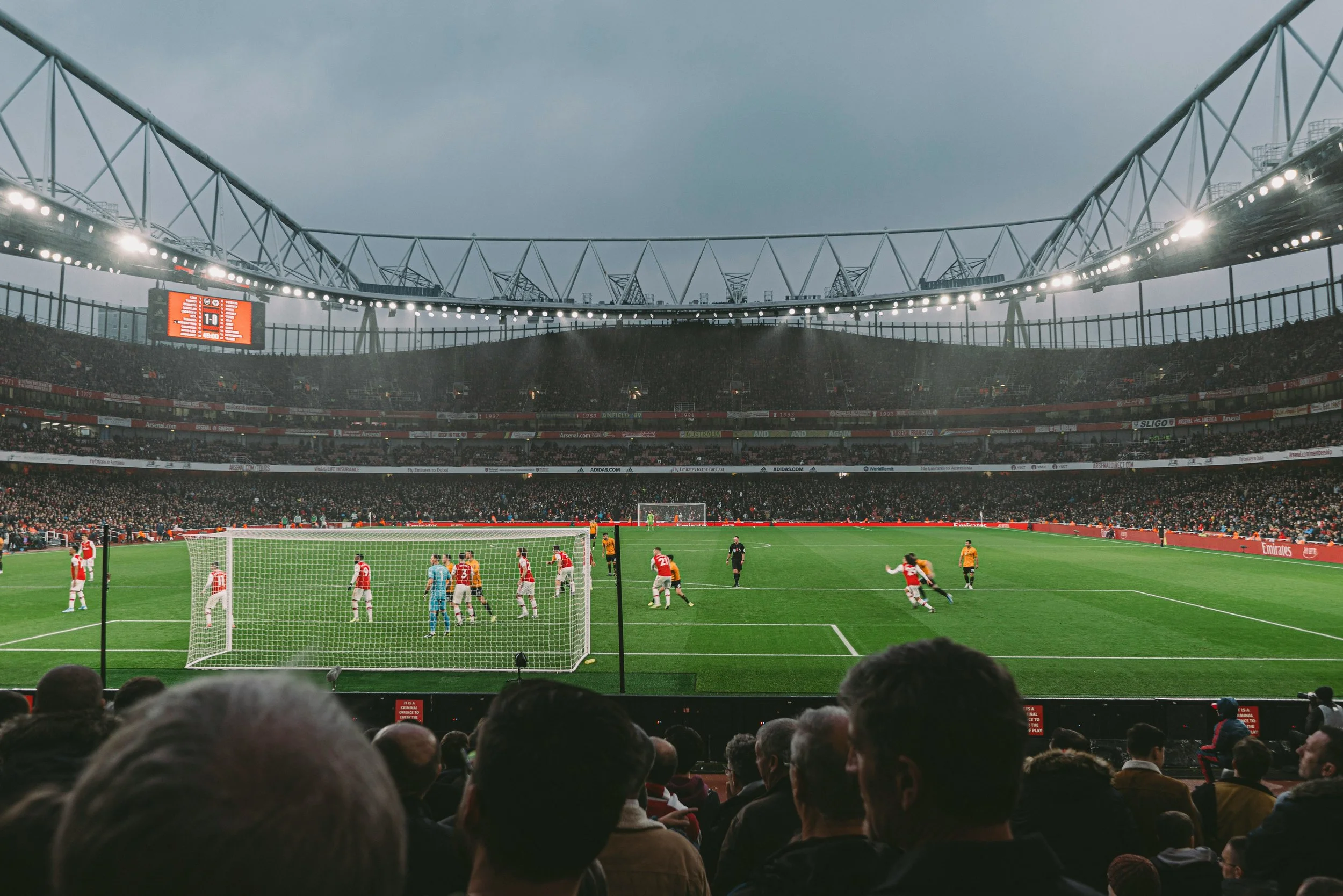
Photo by Nelson Ndongala on Unsplash
1. Culture & "The Family"
Before a manager can implement complex tactics on the pitch, they should aim to establish psychological safety. When Arteta arrived his priority was cultivating a collective family identity.
Culture: Arteta defined culture as "creating a context where everybody can be themselves." By allowing players to be authentic rather than forcing them into a rigid system, he was able to reduce social anxiety and built a foundation of deep trust.
"Everything Matters": A massive sign bearing this mantra was placed at the training ground. Arteta applied this standard holistically. Punctuality in team meetings and showing active, genuine respect to the club’s staff from cleaners, to cooks, to coaches mattered just as much as scoring a match-winning goal.
Ego Deconstruction: Individual talent has to blindly serve the team. Players had to put their ego and individual pursuits aside to instead support team goals.
2. Subconscious Anchors: The 150-Year-Old Olive Tree
Arteta planted a 150-year-old olive tree at the training ground. The tree was brought in to represent deep roots, history, and long-term stability.
As Arteta also noted, an olive tree does not naturally thrive in London's cold, damp environment. He used this specific vulnerability to teach the team a powerful lesson on growth. It is not automatic, it requires active, daily care, attention, and deliberate effort to survive and flourish in such a condition.
The tree serves as a constant reminder. It anchors the players’ minds to the reality that if they want to thrive under the pressures of the Premier League, they must tend to their habits and their team roots every single day.
3. Emotional Grounding & Conditioning: The Story of "Win"
His most famous intervention was introducing a chocolate Labrador to the training ground, named "Win." This was a deliberate exercise in physiological regulation and linguistic priming built directly into the team’s daily lives.
The Neurochemical Reset: In a grueling title race, athletes' nervous systems are under constant attack. Chronic stress causes the brain to pump out cortisol (the stress hormone), which impairs split-second decision-making. Interacting with an animal is proven to immediately drop cortisol levels while spiking oxytocin (the bonding hormone) and dopamine (the reward chemical). "Win" served as a literal physiological reset button.
Rewiring the Brain via Linguistic Priming: In elite football, the word "win" is usually a massive stress trigger, heavily associated with media pressure and the fear of failure. By naming the dog "Win," the word suddenly became the most frequently used word at the training ground, but in completely relaxed, happy contexts. Through classical conditioning, the brain rewires itself. The word "win" gets detached from the threat of failure and gets attached to feelings of comfort, safety, and affection. The idea was, when the pressure reached its absolute peak, Arteta's players weren't running away from the fear of losing but instead they were running toward a concept their minds felt completely safe and comfortable with.
4. Meaningful Connection Off the Pitch
Players connected outside of the pitch through non-football activities, like playing board games, playing golf, and engaging in group prayer. This is a great way for the players to see each other more than just as guys they train with.
Off-the-pitch bonding builds Social Cohesion. It helps with how much team members genuinely like, care for and trust one another. This off-the-pitch synchronization can directly help on matchday. A team with high behavioral synchrony can anticipate each other’s movements, read subtle body language shifts, and execute split-second tactical adjustments faster. Furthermore, activities like board games completely neutralize egos. On a game board, the multi-million-pound captain and the teenage player are completely equal.
5. Cognitive Disruption & Stress Inoculation
Arteta purposefully put his players in stressful situations to help them perform at high-pressure situations without freezing, as well as to teach them skills.
The Anfield Loudspeakers: Before playing away at Liverpool, Arteta blasted "You'll Never Walk Alone" (the opposing team, Liverpool's anthem) on speakers during tactical drills. By pre-exposing their nervous systems to hostile auditory chaos, he removed the element of shock on matchday.
The Professional Pickpockets: During a team dinner, Arteta secretly hired professional pickpockets to rob his own players' phones and wallets. When he revealed the trick, he used the shock to teach a psychological lesson on constant situational awareness. In elite sports, a single second of lapsed vigilance can cost a championship.
The Ultimate Payoff
Arsenal's historic Premier League title didn't happen by accident, nor did it happen because they simply bought the best players. It happened because Arteta and his staff built a team that trusted each other and themselves. A team that believed and fought for that title despite all the heartbreaks prior.
In the past 5 games when it truly mattered, players did not collapse under stress. They supported and relied on each other to win the title.
Mikel Arteta’s humility, commitment, and passion should serve as an inspiration to leaders across every industry, not just football. Even through the lens of a rival fan, it is impossible to look at this Arsenal team and not be impressed.
Photo by Nelson Ndongala on Unsplash
Sources & Further Reading
To learn more about Mikel Arteta’s journey and coaching philosophy, explore the links and references used for this article:
Inside the Dressing Room: Watch the journey in theAll or Nothing: Arsenal Documentary on Amazon Prime Video(I HIGHLY recommend you to watch the episodes)
Watch the Documentary: Get to know him inThe Art of Detail | Episode 2: Mikel Arteta on YouTube
Tactical Deep Dive: Read about his methods on You Are My Arsenal:Maximizing Arsenal's Performance & Arteta's Quirky Coaching Style
The Story of Win & The Olive Tree: Read the original report via The Sun:How Mikel Arteta Used an Olive Tree and a Labrador to Ground His Squad
The Dinner Pickpockets: Read about the pickpockets via The Sun:Mikel Arteta Hires Professional Pickpockets to Rob His Own Players
The Anfield Loudspeakers: Read more about “You’ll Never Walk Alone” via The Sun:Arteta Blasts 'You'll Never Walk Alone' During Arsenal Training Drills
